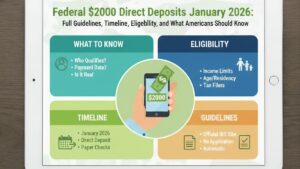
$2000 Federal Deposit January 2026 – What Every Americans Needs to Know
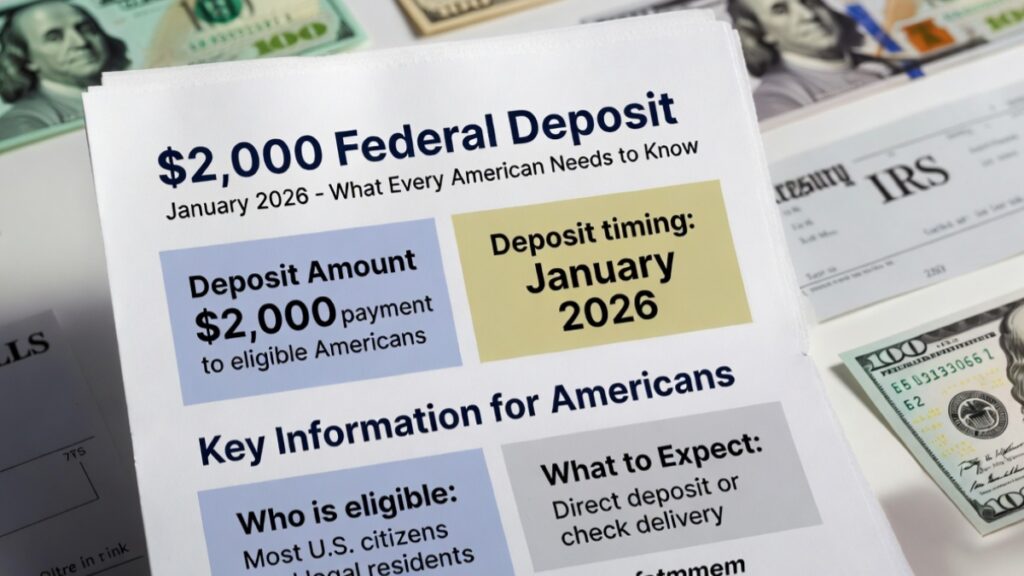
$2000 Federal Deposit January 2026 – What Every Americans Needs to Know
$2000 Federal Deposit January 2026: As January 2026 begins, discussions about a possible $2,000 federal deposit have sparked widespread attention across social media, financial forums, and news outlets. While no blanket payment has been officially confirmed, speculation is fueled by ongoing federal adjustments to Social Security, SSI benefits, and targeted relief measures. For many households navigating inflation and rising living costs, such a deposit could offer crucial financial relief if authorized. Understanding eligibility, potential timelines, and preparation steps is vital for Americans hoping to benefit from this possible government support.
The conversation around the $2,000 deposit echoes the COVID-era stimulus payments that moved quickly to boost household income. However, this year’s potential deposit differs in that it may derive from routine federal adjustments or specific relief programs rather than a universal stimulus. Navigating these nuances is key to separating fact from rumor and ensuring that any approved funds are received promptly.
What the $2,000 Deposit Could Represent
The potential $2,000 federal deposit is unlikely to be a universal stimulus for all Americans. Instead, it likely stems from updates to federal programs such as Social Security cost-of-living adjustments, SSI or SSDI revisions, and other targeted relief efforts. Veterans, seniors on fixed incomes, and low-income households may benefit if the federal government authorizes one-time or phased payments. These adjustments are designed to offset inflationary pressures and provide short-term financial support.
Unlike past emergency stimulus checks, the rollout is expected to be program-specific, with eligibility rules varying by agency and benefit type. Historically, federal payments are staggered to prioritize those most in need, creating phased distributions that can confuse recipients. Experts advise avoiding assumptions that every American will automatically receive the full $2,000, as eligibility criteria differ across programs.
Who Might Qualify for the Payment
Eligibility for any $2,000 deposit will depend on the underlying federal program. Social Security beneficiaries, SSI recipients, veterans receiving VA benefits, and households with lower incomes are likely candidates. Seniors may also benefit from cost-of-living adjustments tied to age or income thresholds. Filing status and reported income will play a key role in determining who receives payments, making accurate record-keeping crucial.
“Many people assume these payments are universal, but in reality, eligibility is program-dependent,” explains fictional policy analyst Anjali Mehta. “Maintaining accurate information with federal agencies, including bank account and mailing address updates, is essential to avoid missing out or being delayed to a later payment cycle.” Past payment schemes highlight the risks of outdated or incomplete records, which often cause weeks-long delays.
Potential Timeline for January 2026 Disbursement
If a $2,000 federal deposit is approved, January 2026 is expected to be the primary distribution month. Historically, direct deposits are prioritized, reaching accounts within days, while paper checks take longer to mail. Federal programs often stagger payments based on benefit type, income level, and administrative logistics, meaning not all recipients will receive funds simultaneously.
Aligning deposits with regular federal benefit schedules, such as Social Security or SSI, could smooth distribution. Past experience shows that updating bank accounts and addresses in advance can prevent hold-ups, as payments are sometimes delayed when information is outdated or incomplete. Recipients who remain proactive are more likely to receive timely deposits if the program is enacted.
Preparing to Receive the Deposit
Americans potentially eligible for a $2,000 deposit should ensure their IRS and Social Security records are current. Filing taxes on time, even if income is low, helps the IRS maintain accurate banking information. Social Security and SSI beneficiaries should also confirm that their personal and payment information is up to date to avoid unnecessary delays.
Using official portals such as IRS.gov and SSA.gov remains the most reliable way to track potential deposits. Recipients should disregard social media claims or unofficial websites promising early access, as these are often scams designed to exploit public interest. Staying proactive and informed ensures that legitimate funds, if approved, reach the right people without interference.
Financial Implications and Caution
A $2,000 deposit could provide immediate relief for seniors, low-income households, and SSI recipients, helping cover essential expenses like groceries, medication, or utilities. For some, it could help offset debt or unexpected costs, offering short-term financial stability. However, experts caution that one-time payments do not replace long-term financial planning and should be used strategically.
“While the $2,000 can be a helpful boost, it’s important not to treat it as a recurring solution,” notes fictional economist Rahul Verma. “Recipients should budget carefully and use the funds for urgent needs rather than relying on them for ongoing expenses.” Lessons from prior federal stimulus cycles show that prudent use of such payments maximizes their impact and prevents financial missteps.
Lessons from Previous Federal Payments
Past federal deposits, including stimulus checks and benefit adjustments, highlight the importance of phased distribution and clear communication. Recipients often receive funds at different times depending on program rules, which can cause anxiety and misinformation. Understanding the administrative process can help manage expectations for January 2026, should the deposit be approved.
Comparing past cycles, the January 2026 payment is expected to follow similar principles: direct deposits first, checks later, and program-specific eligibility. Federal agencies typically issue guidance in advance to reduce confusion, emphasizing the importance of following official announcements rather than relying on social media chatter or unverified news sources.
Staying Informed and Avoiding Scams
Heightened interest in the $2,000 deposit creates a fertile ground for scams. Fraudulent emails, calls, and websites promising early access or guaranteed payments are common during such periods. Recipients should rely solely on IRS.gov, SSA.gov, or official federal communications for accurate information.
Updating personal records, monitoring direct deposits, and confirming mailing addresses are the safest ways to ensure timely receipt of any authorized payments. Vigilance, combined with reliance on verified sources, helps Americans navigate potential disbursements safely and prevents falling victim to scams during periods of uncertainty.
Disclaimer: This article is for informational purposes only and does not constitute financial, tax, or legal advice. No universal $2,000 federal deposit for January 2026 has been officially confirmed. Eligibility, timing, and amounts may vary, and readers should consult official government sources or qualified professionals for guidance tailored to their specific circumstances.