Federal $2000 Deposit Arriving January 2026 for All: Complete Guide for All Beneficiaries

Federal $2000 Deposit Arriving January 2026 for All
Federal $2000 Deposit Arriving January 2026 for All: As the United States steps into 2026, talk of a federal $2,000 deposit has again found its way into daily conversations. It appears in neighbourhood WhatsApp groups, rides on dramatic YouTube headlines, and pops up repeatedly on Facebook pages where people share money-saving advice. For households still wrestling with rent hikes, medical bills, and everyday inflation, the idea of a fresh federal payout feels believable, even comforting.
This matters because financial rumours do not spread in a vacuum. They gain traction when economic pressure is real and memories of past relief are still sharp. During the pandemic years, government checks arrived quickly and changed how Americans think about federal support. Today, the same number—$2,000—has become shorthand for help. But expectation and policy are not the same thing. Understanding how this January 2026 payment story emerged, and why it keeps resurfacing, is key to separating fact from fiction.
How the $2,000 Payment Narrative Took Hold Again
The roots of the current claim stretch back to the COVID-19 stimulus era. At that time, emergency payments landed in bank accounts with little ceremony, reshaping public perception of how fast Washington can act. For many families, those deposits were a turning point, helping them survive layoffs or medical emergencies. Years later, the memory remains powerful.
Whenever inflation spikes or economic anxiety rises, that memory gets reactivated. Add to this a stream of political commentary about tax relief, rebates, or dividends, and the conditions are ripe for confusion. Online, these fragments are stripped of context and shared as certainty. What begins as speculation quickly hardens into a “confirmed” claim once it is repeated often enough.
What Federal Agencies Are Actually Saying
Despite the volume of online chatter, official communication tells a very different story. As of now, neither the Internal Revenue Service nor the U.S. Treasury has announced a nationwide $2,000 payment scheduled for January 2026. There is no legislation passed by Congress authorising such a deposit, and no budget provision to fund it.
Former policy adviser Helen Rodriguez explains that large-scale federal payments leave a clear paper trail. “You see draft bills, cost estimates, hearings, and agency briefings months in advance,” she says. “A payment affecting nearly every adult in the country doesn’t happen quietly.” The absence of these signals strongly suggests that the rumoured deposit is not real.
Why Some Americans Will Still See Money in Early 2026
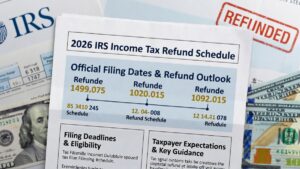
Part of the confusion comes from timing. Early 2026 aligns with tax season, when millions of Americans receive refunds. For families claiming refundable credits like the Earned Income Tax Credit or the Child Tax Credit, refunds can easily cross the $2,000 mark. When these deposits arrive labelled simply as coming from the U.S. Treasury, they resemble stimulus payments at first glance.
There are also individual cases that add to the noise. Amended returns, delayed refunds from previous years, or corrections to benefits can all result in unexpected deposits. To someone already primed by social media rumours, a personal refund feels like confirmation of a universal programme. Personal experience then spreads as anecdotal proof, even though it applies to no one else.
Targeted Federal Payments and the Missing Context
Another reason the story refuses to die is that legitimate federal payments do exist—but they are targeted. Veterans may receive benefit adjustments, some federal employees might see back pay, and specific groups occasionally qualify for one-time assistance. These programmes are real, lawful, and carefully defined.
Online, however, details vanish. Posts highlight the dollar amount and omit eligibility rules. Economist Rahul Mehta notes that “numbers travel faster than explanations.” Once a figure like $2,000 is linked to the federal government, many people assume it applies to everyone. The fine print, essential for understanding policy, rarely survives the journey through social media algorithms.
The Real-World Cost of False Hope
Misinformation around federal payments does more than confuse—it creates risk. Consumer protection agencies have flagged a rise in scams tied to the January 2026 deposit claim. Fake messages promise to “release” funds or verify eligibility, pushing people to share bank details or pay small fees. These messages often mimic official language and logos.
The emotional cost is just as serious. Financial stress lowers scepticism. When people are struggling, the promise of relief can override caution. Digital safety researcher Mark Ellison warns that repeated disappointment erodes trust. “Each false alarm makes people more vulnerable next time,” he says. “Scammers rely on that cycle.”
Why the Rumour Keeps Coming Back
The persistence of the $2,000 payment story reflects deeper economic unease. Many households are still juggling debt, rising insurance costs, and wages that have not kept pace with expenses. In that environment, even an unverified claim offers psychological relief. Repetition slowly turns speculation into expectation.
Social platforms amplify certainty over nuance. Posts declaring “checks approved” spread faster than those explaining legislative hurdles. Over time, familiarity begins to feel like evidence. The rumour becomes background noise, resurfacing whenever financial pressure intensifies, regardless of whether policy has changed.
What a Real Federal Relief Program Would Look Like
If a genuine federal payment were approved, the signs would be unmistakable. Congress would debate the measure publicly. Agencies would issue coordinated statements. Official websites would publish eligibility criteria, timelines, and FAQs. None of this would be left to guesswork or viral posts.
Most analysts believe any future relief is more likely to be targeted rather than universal. Adjustments to tax credits, benefits, or sector-specific aid are seen as more feasible than blanket payments. Until such measures are formally introduced, verification remains the only defence against disappointment.
Disclaimer: This article is published for informational and journalistic purposes only. It is based on publicly available information at the time of writing and does not constitute financial, tax, or legal advice. Federal policies, benefit programmes, and payment schedules may change. Readers are encouraged to consult official government sources or qualified professionals for guidance relevant to their individual circumstances.